How to Get Rid of Dust Mites: 9 Methods That Actually Work
You cannot eliminate dust mites. No product, spray, or gadget removes them from a home permanently. Dust mites are in nearly every house in America, living on the skin flakes you and your pets shed every day. What you can do is reduce their population and keep it down. You can do that by starving the mites so they don't multiply and removing the mites that are already there.
Starve them out
Dust mites need moisture and skin-cell dust to survive. Try to keep your indoor humidity below 50% and reduce the dust they feed on, and their population stalls on its own.
Kill and remove what's already there
Heat, cold, and HEPA filtration physically kill mites. HEPA filtration pulls the allergens out of your air. While washing your bedding on hot water settings kills the mites and allergens hiding in the fabric.
Skip either step to get rid of dust mites, and the other one underperforms. If you lower the humidity level, but never wash your bedding hot, then you've still got a mattress full of allergen-producing mites. Wash everything hot, but leave your bedroom at 65% relative humidity, and the population rebuilds within weeks. Below is the full plan to get rid of dust mites, in order, plus what to do room by room.
What Are Dust Mites?
A dust mite is a microscopic, spider-related insect roughly one-third of a millimeter long. Dust mites do not bite, sting, or burrow into skin. The health problem isn't the mite itself; it's their waste droppings and body fragments, which become airborne and trigger allergy and asthma symptoms when inhaled.
Symptoms of a dust mite allergy typically include a runny or congested nose, sneezing, itchy or watery eyes, and, for people with asthma, wheezing, chest tightness, and trouble breathing. The EPA lists dust mites among the most common indoor asthma triggers, alongside pet dander and mold.
Job 1: Cut Off Their Food and Water Supply
Dust mites thrive at 75–80°F and 70–80% relative humidity. They absorb moisture through their skin rather than drinking it, which makes them surprisingly easy to upset if you drop the humidity in your home so they dehydrate.
1. Keep relative humidity under 50%
This is the single highest-leverage step, and it's the one most people skip. Use a dehumidifier or your air conditioner to hold indoor relative humidity at 50% or below. The CDC recommends 30–50% specifically to control dust mites and other asthma triggers. A $15 hygrometer will tell you where you actually stand and if you need to take action to lower your home's humidity level.
2. Reduce their food source: dust and skin cells
Dust mites eat skin cells, so decluttering and dusting regularly starves them and dries them out. Dust with a damp cloth or microfiber duster, not a dry one; dry dusting just launches allergens into the air instead of removing them. Wash cabinets and countertops that collect dust, and clear clutter that gives dust somewhere to settle undisturbed.
Job 2: Kill and Remove What's Already There
Once humidity levels and dust mite food are under control, the second job is physically getting rid of the mites and allergens already in your fabric and air. Heat and cold both kill dust mites outright; HEPA filtration and vacuuming remove the allergen particles they leave behind.
3. Wash bedding in hot water weekly
Water at 130°F or hotter kills dust mites on contact. Wash sheets, pillowcases, and blankets weekly at this temperature, then finish in a hot dryer. Heat from the dryer alone will kill mites that survive a cooler wash. If your washer can't hit 130°F, the dryer cycle becomes your main defense.
4. Freeze what can't be washed
Stuffed animals and other non-washable fabric items can be sealed in a plastic bag and placed in the freezer overnight. Extreme cold kills dust mites about as effectively as extreme heat, though it won't remove the allergen residue, so plan to vacuum or shake the item out after freezing it.
5. Steam clean carpets and upholstery
Vacuuming alone doesn't reach mites embedded deep in carpet fibers or a couch cushion. A steam cleaner delivers heat well past the temperature dust mites can survive, and it works on the surfaces you can't throw in a washing machine. Check the manufacturer's heat tolerance before steaming delicate upholstery.
6. Vacuum with a sealed HEPA filter
Vacuuming captures dust mite waste and dead mites, but a standard vacuum can also blow fine allergen particles right back into the air through its exhaust. Use a vacuum with a sealed HEPA filter, and vacuum weekly.
7. Use allergen-proof mattress and pillow encasements
A zippered, tightly woven encasement physically blocks mites from colonizing your mattress and pillows and keeps existing allergens contained instead of airborne. This won't make your mattress dust-mite-free, but it dramatically cuts your exposure while you sleep, which is where most exposure happens.
8. Choose hard flooring and washable window coverings where you can
Carpet and heavy drapery are two of the most common dust mite habitats in a home because they're nearly impossible to fully clean. If you're renovating, hard flooring with washable area rugs and blinds or washable curtains instead of heavy drapery will meaningfully cut down the places mites can hide.
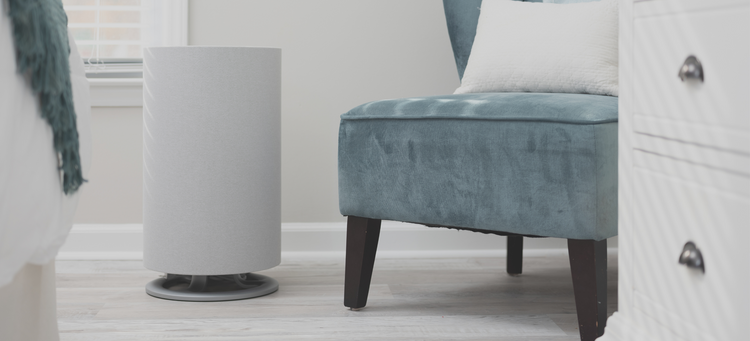
9. Run a HEPA air purifier continuously
An air purifier doesn't kill mites living in your mattress or carpet. What it does is continuously pull the airborne allergen particles (the skin flakes and waste fragments that actually trigger your symptoms) out of the air before you breathe them in. Pair it with the steps above rather than using it as a replacement for them. See what makes a filter genuinely HEPA if you're comparing purifiers.
Which Method Actually Kills Dust Mites?
Not every step on this list kills mites outright; some starve them, some remove the allergens they leave behind. Here's how each one actually works, so you know what you're getting from each step.
| Method | What it does | Effort | Kills mites? |
|---|---|---|---|
| Humidity below 50% | Starves them of moisture | Low, once set up | No: prevents growth |
| Hot wash (130°F+) + hot dryer | Kills mites on fabric | Medium: weekly | Yes |
| Freeze 24 hours | Kills mites on non-washables | Low | Yes |
| Steam cleaning | Kills mites embedded in carpet/upholstery | Medium: periodic | Yes |
| HEPA vacuum | Removes waste and dead mites from surfaces | Medium: weekly | No: removes, doesn't kill |
| Allergen encasements | Blocks exposure, contains allergens | Low: one-time | No |
| HEPA air purifier, continuous | Removes airborne allergen particles | Low: passive | No |
Getting Rid of Dust Mites by Location
Dust mites cluster wherever skin cells and moisture collect. Here's the fastest fix for the spots that matter most, in order of how much exposure they typically cause.
Mattress
You spend more hours in contact with your mattress than anywhere else in the house, which makes it the single biggest source of exposure. A mattress can't be washed, so a zippered allergen-proof encasement plus weekly HEPA vacuuming of the surface is your main defense.
Pillows
Pillows collect their fair share of skin cells and dander, especially if you have a dry scalp. Wash washable pillows weekly in hot water; for pillows that can't be washed, use a pillow-specific allergen encasement.
Couch and upholstered furniture
Cushions and seams trap dust the same way a mattress does. Vacuum furniture with a HEPA vacuum weekly, wash removable cushion covers on hot, and steam-clean the upholstery a few times a year.
Carpet and rugs
Carpet fibers hold onto dust that vacuuming alone can't fully remove. Steam clean periodically, and if allergies are severe, area rugs on hard flooring are far easier to keep clean than carpet.
Pet beds
A pet bed is essentially a second mattress for dust mites. Wash it on the same weekly hot-water schedule as your own bedding.
Car seats, including child car seats
Upholstered car seats accumulate dust mites the same way home furniture does, and they're easy to overlook. Vacuum seats and floor mats regularly, and wash removable seat covers when the manufacturer allows it.
Sizing a HEPA Air Purifier for Dust Mite Allergens
An air purifier only helps if it's sized to actually clean the room it's in — an undersized unit just runs constantly without keeping up. Match the purifier to your room's square footage:
| Room size | Recommended model | Filtration |
|---|---|---|
| Up to 293 sq ft | AirMend 150HB | HEPA |
| Up to 322 sq ft | AirMend 200HB | HEPA |
| Up to 368 sq ft | AirMend 270HB | HEPA |
| Up to 363 sq ft | Mod Jr. | HEPA + activated carbon |
| Up to 563 sq ft | Mod+ | HEPA + activated carbon |
Dust mite allergens are particles, not odors or gases, so a HEPA-only unit like AirMend is the right technology for most bedrooms. If you're also dealing with pet odor or live in a home with cooking or smoke smells, the Mod series with HEPA and activated carbon is the best fit for you. For a deeper look at how that math works, see our guide to matching room size to CADR and our explanation of what CADR actually measures.
Do Air Purifiers Get Rid of Dust Mites?
No, not directly. An air purifier can't reach mites living in your mattress, carpet, or couch cushions, because those mites and their waste aren't airborne. What a HEPA air purifier for dust does well is continuously capture the allergen particles that are airborne before you breathe them in. These allergens are kicked up by walking across a carpet, sitting on a couch, or making the bed.
Air purifiers are genuinely useful for symptom control, but they're a complement to the steps above, not a substitute for them. If you buy a purifier and skip the hot laundry and humidity control, you'll still have a mattress full of mites; you'll just be breathing slightly cleaner air next to it.
Dust Mites vs. Bed Bugs
Dust mites are often confused with bed bugs because both are associated with mattresses, but they're unrelated pests with very different implications. Dust mites do not bite. Dust mites cause allergy symptoms through their waste, not through contact with skin. Bed bugs are visible to the naked eye, bite and feed on blood, and leave welts or bite marks. If you're waking up with bite marks, you're dealing with bed bugs or another biting insect, not dust mites, and the treatment is entirely different.
Frequently Asked Questions
What kills dust mites instantly?
Nothing kills dust mites truly instantly. The fastest, most reliable methods are hot water at 130°F or above and a hot dryer cycle, both of which kill mites within about 15 minutes, and freezing at 0°F for 24 hours for items that can't be washed.
Does heat kill dust mites?
Yes. Water or dryer heat at 130°F or higher kills dust mites and is one of the two most effective methods available, along with freezing.
Can you get rid of dust mites completely?
No. Dust mites are present in nearly every home and can't be permanently eliminated. You can, however, reduce their population dramatically through humidity control, regular hot washing, and HEPA filtration, which is enough to control symptoms for most people.
How do you get dust mites out of pillows?
Wash washable pillows weekly in water at 130°F or higher and dry them on a hot cycle. For pillows that can't be machine washed, use a zippered allergen-proof pillow encasement going forward.
How do you get rid of dust mites in a mattress?
You can't wash a mattress, so the combination that works is a zippered allergen-proof mattress encasement, weekly HEPA vacuuming of the surface, and keeping bedroom humidity below 50% so the population already inside stops growing.
Do air purifiers get rid of dust mites?
Not directly. A purifier can't reach mites embedded in fabric. It continuously removes the airborne allergen particles that mites produce, which is what actually causes most symptoms, making it a useful complement to washing and humidity control rather than a replacement.
What's the best air purifier for dust mites?
A HEPA air purifier sized correctly for the room, since dust mite allergens are fine particulates, not odors or gases. See the sizing table above to match a model to your room's square footage.
How do you get rid of dust mites on your body or skin?
Dust mites don't live on skin or hair; they live in bedding, carpet, and upholstered furniture. Itching or irritation after contact with these surfaces is caused by allergen exposure, not mites on your body, and a normal shower removes any surface residue.
What's the difference between dust mites and bed bugs?
Dust mites are microscopic, don't bite, and cause symptoms through allergen exposure. Bed bugs are visible, bite, and leave marks on the skin. If you have bite marks, it's bed bugs, not dust mites.
Improve Your Home's Air Quality with an Oransi Air Purifier
Dust mite control comes down to the boring basics done consistently: keep humidity under 50%, wash bedding in hot water every week, and run a properly sized HEPA purifier. Oransi's AirMend line is specifically designed to handle fine particulates like airborne dust mite allergens. Browse air purifiers for dust and allergies or contact our team if you're not sure which size fits your room.